




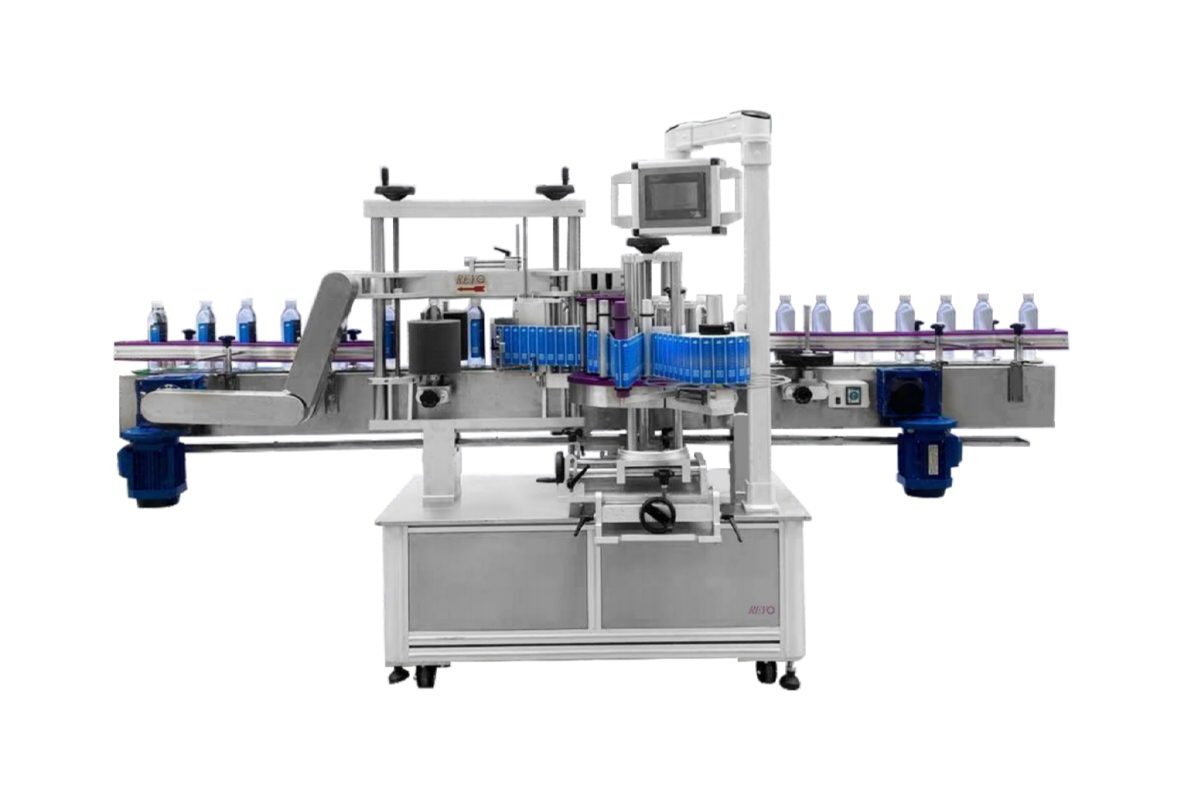
Labeling Machine Troubleshooting Tips
As a professional labeling machine manufacturer, understanding how different labeling machines work is essential for maintaining stable production. A labeling machine is not only responsible for applying labels accurately but also needs to operate continuously under different production speeds and packaging conditions.
Common types of labeling equipment include self adhesive labeling machines, shrink sleeve labeling machines, round bottle labeling machines, semi automatic labeling machines, and fully automatic labeling machines. Depending on the machine configuration, these systems can apply labels to flat surfaces, single or multiple sides of packages, cylindrical containers, recessed areas, corners, and other difficult surfaces.
Like any other packaging equipment, a labeling machine requires regular adjustment and maintenance. Incorrect settings can result in tilted labels, poor label feeding, glue problems, bottle jams, or unstable labeling performance.
The following are some practical labeling machine troubleshooting tips that can help operators identify and solve common problems.
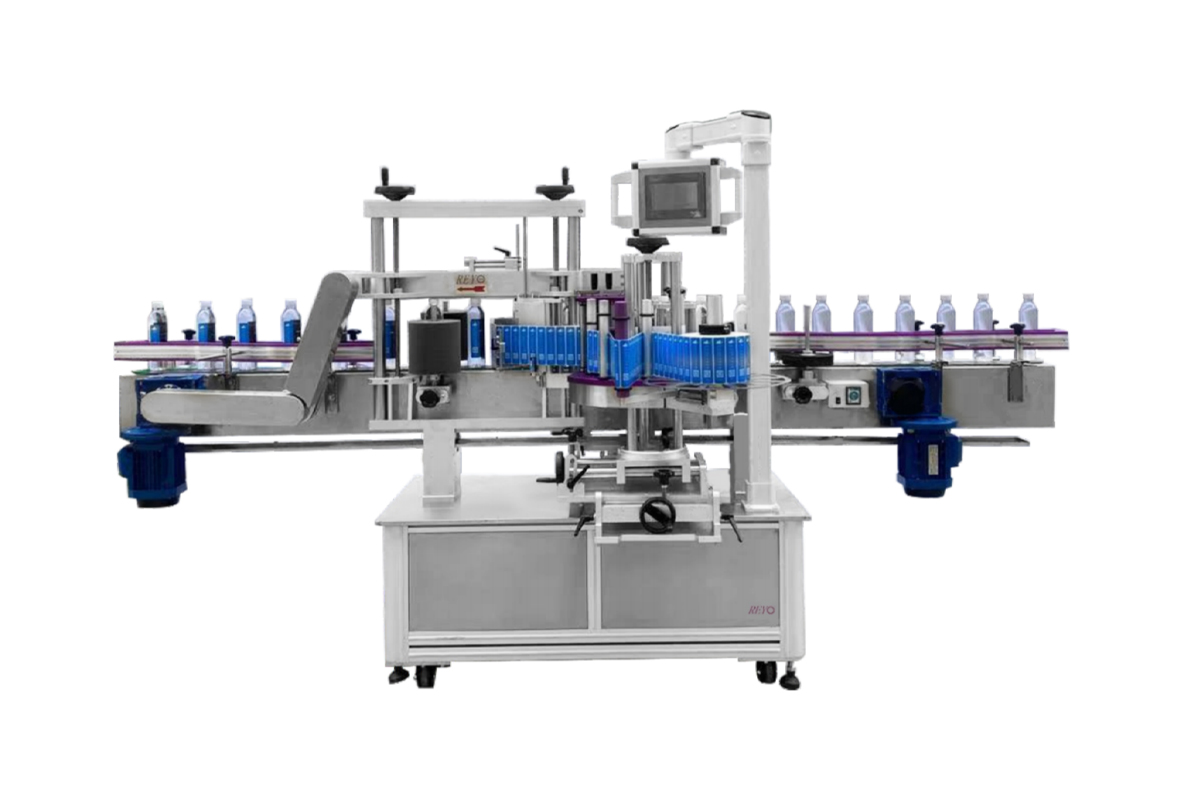
1. Adjusting the Label Pressing Brush
The pressing brush is used to help the label adhere smoothly to the container surface after the label has been applied. Incorrect brush positioning may cause wrinkles, incomplete adhesion, or uneven labeling.
The center of the brush should be aligned with the center of the label, with both sides remaining symmetrical. The brush should be perpendicular to the container surface.
For the pressing overlap:
A single pressing brush should overlap the container by approximately 10–15 mm.
A combined pressing brush should overlap by approximately 5–10 mm.
The cleaning brush should be approximately 1–2 mm away from the sponge.
When adjusting the bottle pressing head, the pressing head should be approximately 20 mm lower when there is no bottle than when a bottle is present.
If the pressing brush is too far away from the container, the label may not be pressed firmly enough. If it is too close, excessive pressure may cause label deformation or affect smooth bottle movement.
For an Automatic Bottle Labeling Machine, the pressing mechanism should be checked whenever changing bottle sizes or label specifications.
2. Adjusting the Label Magazine
The label magazine plays an important role in stable label feeding. Incorrect adjustment can cause labels to move sideways, become skewed, or fail to feed smoothly.
The center line of the label magazine, the center axis of the labeling station, and the center axis of the label plate should be aligned.
First, adjust the label plate so that it is tangent to the label paper. The label plate and label paper should initially have almost zero clearance. Then move the label magazine approximately 1–2 mm closer.
Adjusting the Label Magazine Clearance
The clearance between the label paper and the two side pressure strips should generally be maintained at approximately 0.8–1 mm.
If the clearance is too large, the label paper may move inside the magazine, resulting in tilted labels.
If the clearance is too small, the label paper may not move smoothly, causing poor label feeding or label jams.
Adjusting the Label Gripper
The upper and lower label grippers should be positioned on the same vertical plane. The left and right grippers should also apply force evenly to the label paper.
Correct alignment allows the label gripper to pick up the label smoothly without pulling or deforming it.
Adjusting the Label Supply Roller
When there are no labels in the magazine, the label pressure plate should be able to reach the front end of the magazine.
After labels are loaded, the pressure plate should not damage or crush the labels near the label hook.
This adjustment is particularly important for maintaining consistent label feeding on a fully automatic labeling machine.
3. Adjusting the Infeed Star Wheel, Outfeed Star Wheel, and Infeed Screw
For high-speed bottle labeling machines, the infeed star wheel, outfeed star wheel, and infeed screw must work together correctly. Poor adjustment can cause bottle jams, unstable positioning, or inconsistent labeling.
The bottle pressing head can be used as the reference point during adjustment.
Infeed Star Wheel Adjustment
First, adjust the infeed star wheel.
When the pressing head has just reached the bottle, adjust the star wheel so that the bottle is positioned in the center of the star wheel pocket.
Correct positioning ensures that the bottle enters the labeling station smoothly.
Infeed Screw Adjustment
Use the infeed star wheel as the reference.
When the bottle is positioned in the center of the star wheel pocket, adjust the infeed screw so that the bottle-feeding side of the screw is close to the bottle without pushing or displacing it.
If the screw is too tight, it may change the bottle position. If it is too loose, bottle feeding may become unstable.
Outfeed Star Wheel Adjustment
When the pressing head has just lifted away from the bottle, adjust the outfeed star wheel so that the bottle remains centered in the star wheel pocket.
Proper synchronization between the infeed system, labeling station, and outfeed system is essential for stable operation of a high-speed automatic labeling machine.
4. Adjusting the Labeling Station
The labeling station is one of the most important parts of a labeling machine. For glue-based labeling systems, the doctor blade, glue roller, and label plate must be adjusted correctly to achieve consistent adhesive application.
Doctor Blade and Glue Roller Adjustment
The doctor blade and glue roller should maintain consistent contact along their entire length.
There should be no visible gap between them. If a gap appears, the eccentric bolts can be adjusted to correct the position of the doctor blade.
An uneven gap may result in inconsistent glue application, which can cause labels to peel, wrinkle, or adhere unevenly.
Glue Roller and Label Plate Adjustment
The label plate and glue roller should contact each other without excessive pressure.
If the clearance is too large, too much glue may be applied to the label plate, resulting in glue splashing or excessive adhesive.
If the clearance is too small, excessive contact pressure may squeeze the glue away, leaving part of the label plate without sufficient adhesive.
In practical operation, a clearance of approximately 0.1–0.2 mm between the label plate and glue roller is generally suitable.
The clearance can be adjusted through the bearing housing underneath the glue roller. If necessary, the upper bearing can also be adjusted.
Common Labeling Machine Problems and Their Causes
Many labeling problems are caused by incorrect mechanical adjustment rather than a failure of the machine itself.
| Problem | Possible Cause | Recommended Check |
|---|---|---|
| Label is tilted | Label magazine clearance is too large | Check 0.8–1 mm clearance |
| Label does not feed smoothly | Label magazine clearance is too small | Check pressure strips and label grippers |
| Label has wrinkles | Pressing brush position or pressure is incorrect | Adjust brush position and pressing force |
| Uneven glue application | Doctor blade or glue roller is incorrectly adjusted | Check contact and clearance |
| Excessive glue | Clearance between glue roller and label plate is too large | Adjust to approximately 0.1–0.2 mm |
| Insufficient glue | Glue roller is pressing too tightly | Check roller and label plate clearance |
| Bottle jams | Star wheel or infeed screw is incorrectly positioned | Recheck bottle center position |
| Bottle positioning is unstable | Infeed screw applies excessive force | Adjust the screw without moving the bottle |
| Label feeding is unstable | Label gripper or supply roller is incorrectly adjusted | Check label gripping and pressure |
| Inconsistent labeling position | Bottle positioning system is not synchronized | Check star wheels, conveyor, and pressing system |
How to Reduce Labeling Machine Failures
Good maintenance is just as important as troubleshooting. A well-maintained labeling machine can operate more reliably and maintain consistent labeling quality over a longer service life.
Check the Machine Before Production
Before starting production, operators should check the label feeding system, bottle conveying system, pressing mechanism, labeling station, and control system.
Small deviations should be corrected before the machine reaches full production speed.
Adjust the Machine When Changing Products
Different bottles and labels require different machine settings. When changing bottle sizes, label dimensions, or label materials, operators should recheck the bottle positioning, label magazine, pressing brush, and labeling station.
This is particularly important for a flexible automatic bottle labeling machine designed to handle multiple bottle specifications.
Keep Moving Parts Clean
Adhesive residue, label fragments, dust, and product contamination can affect rollers, brushes, sensors, and label-feeding components.
Regular cleaning helps prevent unstable label feeding and unnecessary mechanical wear.
Follow the Manufacturer's Adjustment Standards
Different labeling machines have different mechanical structures and adjustment requirements. Operators should follow the manufacturer's recommended settings instead of relying only on experience.
For professional packaging operations, working with an experienced labeling machine manufacturer can also make troubleshooting, spare parts replacement, and technical support easier.
Why Proper Adjustment Matters
A labeling machine consists of multiple systems that must work together. Label feeding, bottle positioning, adhesive application, label application, pressing, and product conveying all affect the final result.
For example, even if the label dispensing system is working correctly, an incorrectly adjusted infeed star wheel can cause bottle positioning problems. Similarly, accurate bottle positioning cannot compensate for excessive glue or an improperly adjusted pressing brush.
Therefore, labeling machine troubleshooting should always consider the complete labeling process rather than focusing on only one component.
The key to keeping a labeling machine running reliably is not only repairing failures after they occur but also making accurate adjustments and performing regular maintenance.
Whether you are using a self adhesive labeling machine, shrink sleeve labeling machine, round bottle labeling machine, semi automatic labeling machine, or fully automatic labeling machine, correct adjustment of the pressing system, label magazine, bottle feeding mechanism, and labeling station is essential.
For manufacturers operating high-speed production lines, proper maintenance can help reduce downtime, improve label positioning accuracy, and extend the service life of the equipment.
If you are selecting a new automatic labeling machine, it is also important to consider not only the machine's labeling speed but also its adjustment range, mechanical structure, control system, maintenance requirements, and after-sales technical support.