




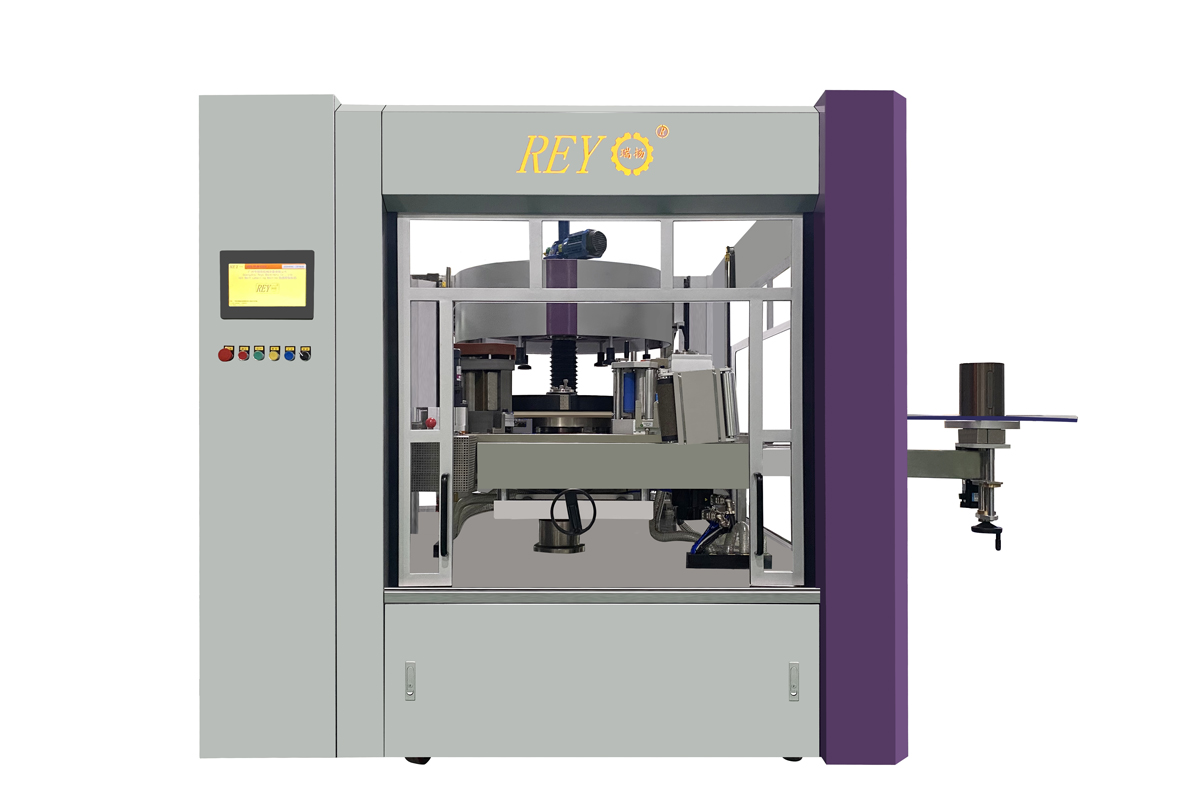
What Is a Rotary OPP Hot Melt Glue Labeling Machine?
The Rotary OPP Hot Melt Glue Labeling Machine is a high-speed automatic labeling solution designed for applying OPP film labels to bottles and other compatible containers. Using hot melt adhesive and a rotary multi-station structure, this machine supports continuous labeling operations for beverage, food, condiment, and other packaging industries.
As an important type of industrial labeling equipment, it integrates bottle feeding, rotary positioning, label feeding, cutting, adhesive application, and label wrapping into one automated process. Compared with manual labeling, an automatic rotary labeling machine helps improve production efficiency, maintain consistent label application, and reduce labor requirements.
For manufacturers operating high-volume bottling lines, an automatic rotary OPP Labeling Machine can be integrated with filling equipment, bottle conveyors, and downstream packaging systems to support continuous production.
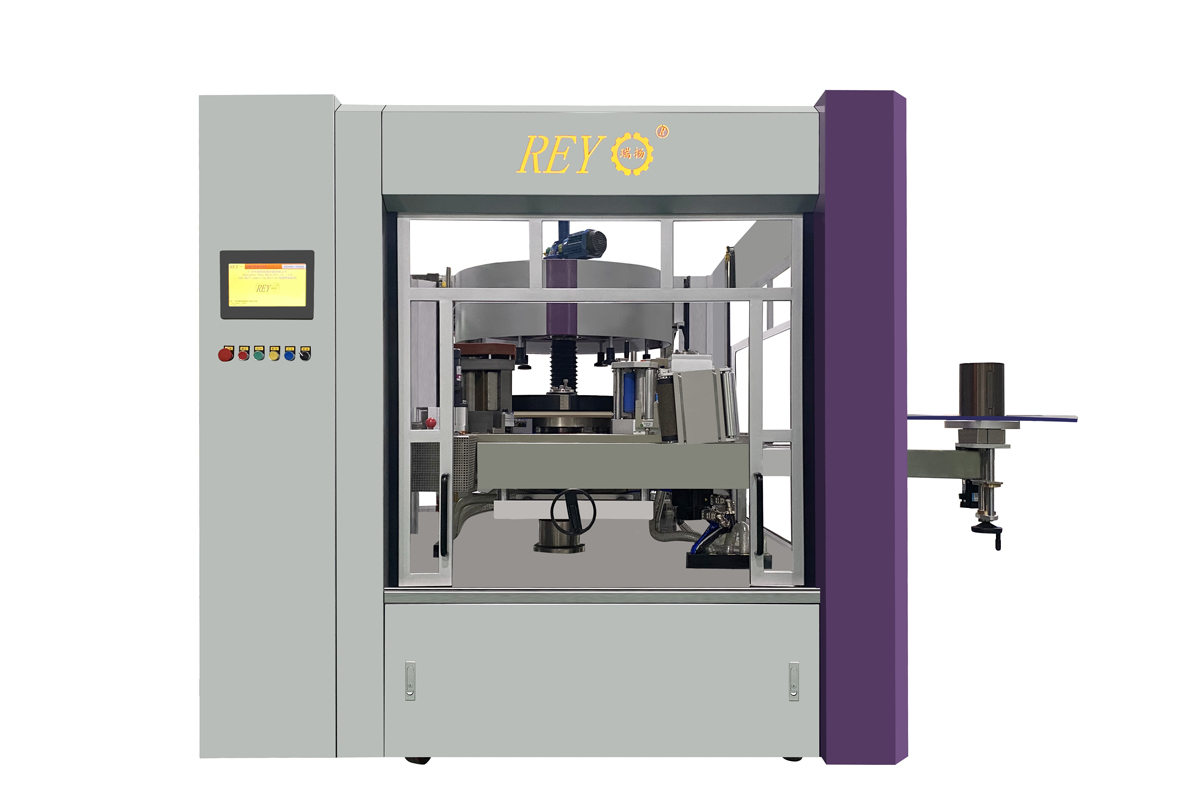
What Is a Rotary OPP Hot Melt Glue Labeling Machine?
A rotary OPP hot melt glue labeling machine is an Automatic Bottle Labeling Machine that uses oriented polypropylene (OPP) film labels and hot melt adhesive to label compatible containers.
OPP film is commonly used for bottle labels because it is lightweight and suitable for high-speed labeling applications. During the labeling process, the machine feeds and cuts the film label, applies hot melt adhesive to designated areas, and transfers the label onto the bottle surface.
The rotary structure allows multiple bottles to pass through different labeling stations in sequence. This continuous operating method makes the machine suitable for high-volume packaging applications where stable output and consistent labeling quality are important.
The exact labeling method, adhesive application position, bottle rotation mechanism, and supported container specifications depend on the machine configuration.
How Does an Automatic Rotary OPP Labeling Machine Work?
The working process of an automatic rotary labeling machine generally consists of four main stages.
1. Automatic Bottle Feeding
Bottles enter the conveyor system and are transferred to the rotary labeling unit. The feeding mechanism helps maintain a stable bottle supply and supports continuous production.
2. Rotary Bottle Positioning
The rotary system transfers bottles through multiple stations. Each bottle is held or positioned according to the machine design to ensure that the label can be applied consistently.
Stable bottle positioning is essential for achieving uniform label placement and reducing labeling defects.
3. Label Cutting and Hot Melt Glue Application
The label feeding system supplies OPP film from a roll and cuts it into the required label length. Hot melt adhesive is then applied to designated areas of the label according to the machine's adhesive application design.
Accurate label feeding, cutting, and glue control help maintain consistent label placement and adhesion.
4. Label Wrapping and Product Output
The cut label is transferred onto the bottle surface and wrapped around the container. The labeled bottle then moves to the next production stage, such as inspection, packing, or case handling.
This automated process enables the rotary OPP film labeling machine to support continuous bottle labeling with reduced manual intervention.
Key Features of a Rotary OPP Hot Melt Glue Labeling Machine
High-Speed Continuous Labeling
The rotary multi-station structure supports continuous bottle processing and is suitable for high-volume production environments. It can help beverage and food manufacturers improve packaging efficiency while reducing dependence on manual labeling.
Actual labeling speed depends on bottle dimensions, label specifications, machine configuration, and production line conditions.
OPP Film Label Compatibility
The machine is designed to work with OPP film labels, which are commonly used for beverage bottles and other compatible packaging containers. The lightweight film can support attractive product presentation and efficient high-volume labeling.
Label thickness, dimensions, and material compatibility should be confirmed before production.
Controlled Hot Melt Adhesive Application
Hot melt adhesive is heated and applied to designated areas during the labeling process. Proper temperature and adhesive control help support reliable bonding between the OPP film label and the bottle surface.
The adhesive system should be selected according to the label material, container surface, and production requirements.
Automatic Rotary Operation
The rotary bottle labeling machine coordinates bottle transfer, label feeding, adhesive application, and label wrapping. This integrated design helps maintain a consistent labeling process and supports integration with automated packaging lines.
Integration with Bottling Production Lines
An automatic rotary OPP hot melt glue labeling machine can be configured to work with upstream and downstream equipment, including bottle handling systems, filling machines, conveyors, inspection equipment, and packaging machinery.
This integration helps manufacturers build a more coordinated production workflow and reduce unnecessary manual handling.
Applications of an OPP Hot Melt Glue Labeling Machine
The OPP hot melt glue labeling machine is commonly considered for high-volume bottle labeling applications across several industries.
Beverage Industry
Typical applications include mineral water bottles, bottled drinks, and juice containers. OPP film labels are often selected for beverage packaging where efficient labeling and consistent product presentation are required.
Food and Condiment Industry
The machine may be used for compatible edible oil bottles, sauce containers, seasoning bottles, and other food packaging products. Container material, shape, and label specifications should be checked to ensure suitability.
Personal Care and Household Products
Certain shampoo, body wash, and household product bottles may be suitable for OPP film labeling, depending on the container design and adhesive requirements.
Automated Packaging Lines
For manufacturers operating continuous production lines, a rotary OPP labeling machine can be connected with bottle feeding, filling, capping, conveying, inspection, and downstream packaging equipment.
The final configuration should match the required production capacity and the physical characteristics of the containers.
Rotary OPP Hot Melt Glue Labeling Machine vs. Self Adhesive Labeling Machine
Both rotary OPP hot melt glue labeling machines and self adhesive labeling machines are used in product packaging. However, they differ in label materials, adhesive methods, and equipment requirements.
| Comparison | Rotary OPP Hot Melt Glue Labeling Machine | Self Adhesive Labeling Machine |
|---|---|---|
| Label material | OPP film labels | Pressure-sensitive self-adhesive labels |
| Adhesive method | Hot melt adhesive is applied during labeling | Adhesive is already present on the label |
| Label application | Film feeding, cutting, gluing, and wrapping | Label dispensing and direct application |
| Equipment structure | Commonly uses a rotary multi-station design for high-volume applications | Can use linear or rotary configurations |
| Glue system | Requires a hot melt adhesive heating and control system | Usually does not require a separate hot melt glue system |
| Typical applications | High-volume bottle labeling where OPP film is suitable | Bottles, boxes, and various other packaging surfaces |
The main difference is the adhesive application method. An OPP hot melt glue labeling machine applies film labels using hot melt adhesive, while a self adhesive labeling machine applies labels that already have a pressure-sensitive adhesive layer.
The better option depends on label material, production volume, packaging design, and operating requirements.
How to Choose the Right Rotary Bottle Labeling Machine
Before purchasing an automatic bottle labeling machine, manufacturers should evaluate several factors.
Bottle Shape and Dimensions
Confirm the bottle diameter, height, surface shape, and material. These specifications affect bottle handling, label wrapping, and machine adjustment.
Label Specifications
Provide the label material, thickness, width, length, and roll specifications. For OPP film labels, confirm compatibility with the feeding, cutting, and adhesive application systems.
Required Production Speed
Determine the required output in bottles per hour and consider the capacity of the complete bottling line. The labeling machine should operate in coordination with filling and downstream packaging equipment.
Adhesive and Labeling Requirements
Confirm the required adhesive type, glue application method, label overlap, and final appearance. These factors influence machine configuration and operating parameters.
Automation and Integration
Consider whether the machine needs to connect with existing conveyors, filling machines, inspection systems, and packaging equipment. Proper integration can improve production coordination and reduce manual handling.
Working with an experienced labeling machine manufacturer can help ensure that the selected machine matches the actual bottle, label, and production requirements.
Why Choose an Automatic Rotary OPP Labeling Machine?
For manufacturers producing large quantities of bottled products, an automatic rotary OPP hot melt glue labeling machine offers an integrated solution for film label application.
Its main advantages include continuous rotary operation, compatibility with OPP film labels, controlled hot melt adhesive application, and the ability to integrate with automated bottling lines.
By selecting the correct machine configuration, manufacturers can improve labeling consistency, support production efficiency, and maintain a uniform appearance across packaged products.
If you are looking for a high speed labeling machine for bottled beverages, food products, or other compatible containers, confirm your bottle specifications, label material, required output, and production line layout before selecting the equipment.
Frequently Asked Questions
What is an OPP hot melt glue labeling machine?
An OPP hot melt glue labeling machine applies OPP film labels to compatible bottles using hot melt adhesive. It is commonly used in high-volume bottle labeling applications.
What is the difference between a rotary OPP labeling machine and a regular bottle labeling machine?
A rotary OPP labeling machine is designed for OPP film labels and commonly uses a rotary multi-station structure. Other bottle labeling machines may use self-adhesive labels or different labeling methods, depending on their design.
Which industries use rotary OPP labeling machines?
Common applications include bottled water, beverages, juice, edible oil, sauces, condiments, and selected personal care products.
Can a rotary OPP labeling machine be integrated with a filling line?
Yes. Depending on the configuration, it can be integrated with bottle feeding systems, filling machines, conveyors, inspection equipment, and downstream packaging machinery.
Is an OPP hot melt glue labeling machine suitable for every bottle?
No. Suitability depends on bottle shape, dimensions, surface material, label specifications, adhesive requirements, and machine configuration. These details should be confirmed before ordering.